
Most people do cardio to “stay in shape.”
But if your goal is to live better, longer — that’s the wrong target.
If you’re going to invest time in cardio, you want to get the most from it.
You may have heard terms like Zone 2, Zone 5, or HIIT. Or you may just get out and move—walking, running, biking, going hard.
But many people feel stuck. They’re active, but not progressing. They’re moving, but not sure where it’s taking them.
There’s action, but no plan. The goal is a vague “be healthy.”
But if your goal is to live as long as possible, with as many high-quality years as possible, it’s worth dialing in your cardio.
This article will help you do that. We’ll cover:
- The difference between activity and exercise (and why both matter)
- The 3 key intensity zones you should train
- The most common cardio mistakes
- A simple plan to do cardio right — for life
Activity vs Exercise
Think of activity as your daily movement — and exercise as your structured training.
In the same way that supplements can’t replace a poor diet, exercise can’t replace a sedentary lifestyle.
Your longevity foundation is daily movement. Then you supplement with focused workouts.
Before we get into cardio specifics, start with movement habits:
- Aim for 7,000–10,000 steps per day
- Stand or shift position every hour
- Take walking breaks or walking meetings
- Build active hobbies like hiking, biking, gardening, or sports
Just remember: lighter activities need intensity added. More intense activities may need injury prevention and recovery strategies.
The 3 Intensity Zones
To simplify things, think of cardio training in 3 categories:
- Recovery
- Conditioning
- Overload
Recovery
This includes “Zone 1” and “Zone 2” training. It’s low-to-moderate intensity and supports healing, mitochondrial function, and metabolic health.
As you get into Zone 2, you’ll sweat. You’ll breathe harder. But you can still speak in full sentences. Afterward, you’ll often feel more energized—not drained.
Conditioning
This is moderate-to-hard effort. Talking becomes harder. You can sustain it, but it takes work. It covers heart rate Zones 3 and 4.
This is where fitness is built—but it also taxes recovery.
Overload
This is high-intensity work—think HIIT or Zone 5. It’s short, tough, and you’ll feel it the next day.
This is where performance is pushed. But if you live here too often or you haven’t build your base first, it breaks you down.
The Cardio Pyramid
Imagine your cardio training as a pyramid:
- Base: Daily activity
- Layer 2: Recovery
- Layer 3: Conditioning
- Top: Overload
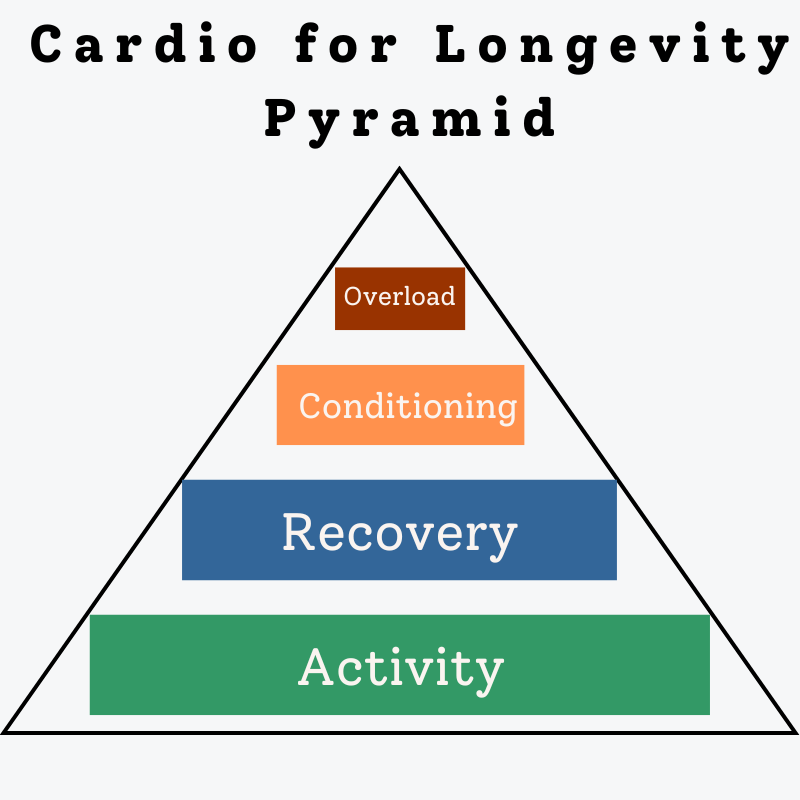
Now let’s see how this plays out for different profiles:
Unhealthy or Inactive
Low daily movement. Minimal steps. Long hours of sitting or lying down.
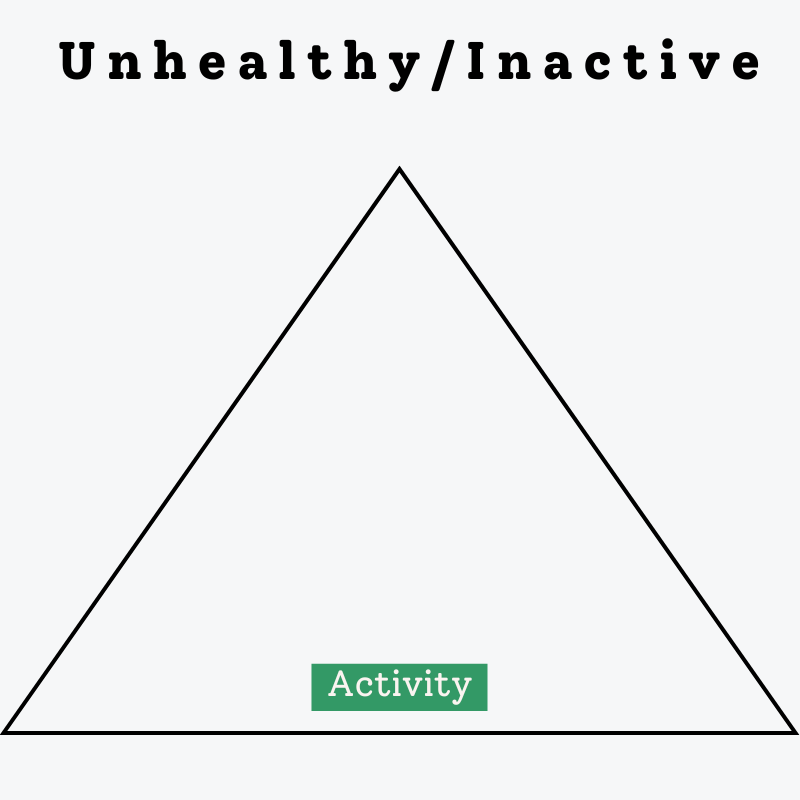
This is a sedentary lifestyle and as you age you will rapidly lose the ability to do the things that make life worth living.
The longer you wait to rebuild, the harder it will be.
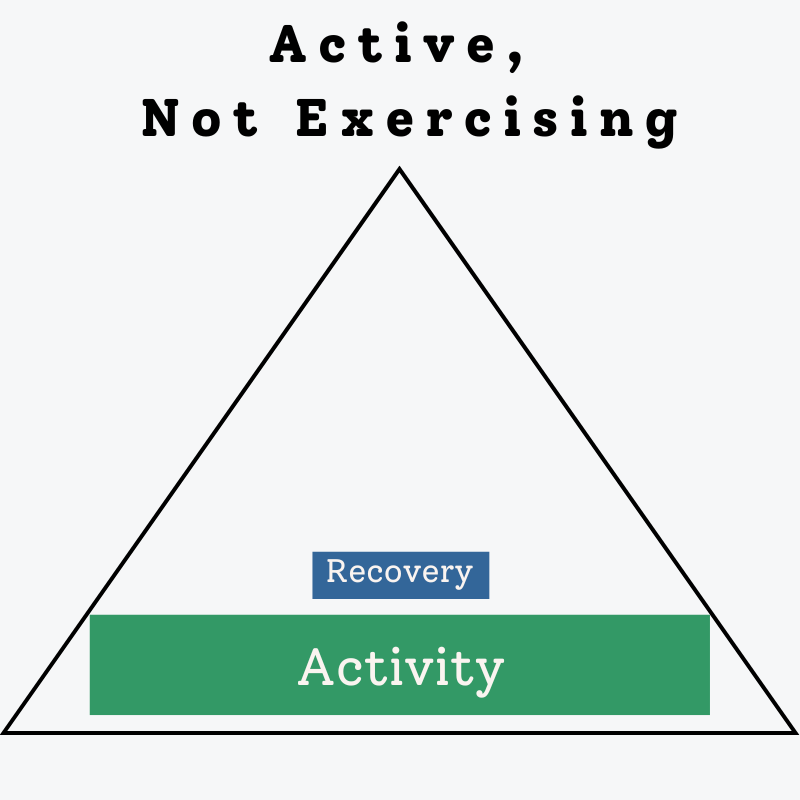
Active, Not Exercising
You’re moving—gardening, home projects, walking—but your heart rate rarely rises.
You’re much better off than someone who is sedentary, but over time, without stimulus to maintain fitness, there’s a good chance your ability to do the things you love will decline.
You aren’t planning.
You’re hoping you are genetically lucky.
Fit, Not Healthy
You look fit but feel off. Aches, chronic issues, hormone or gut symptoms.
You perform well in workouts… but crash outside of them.
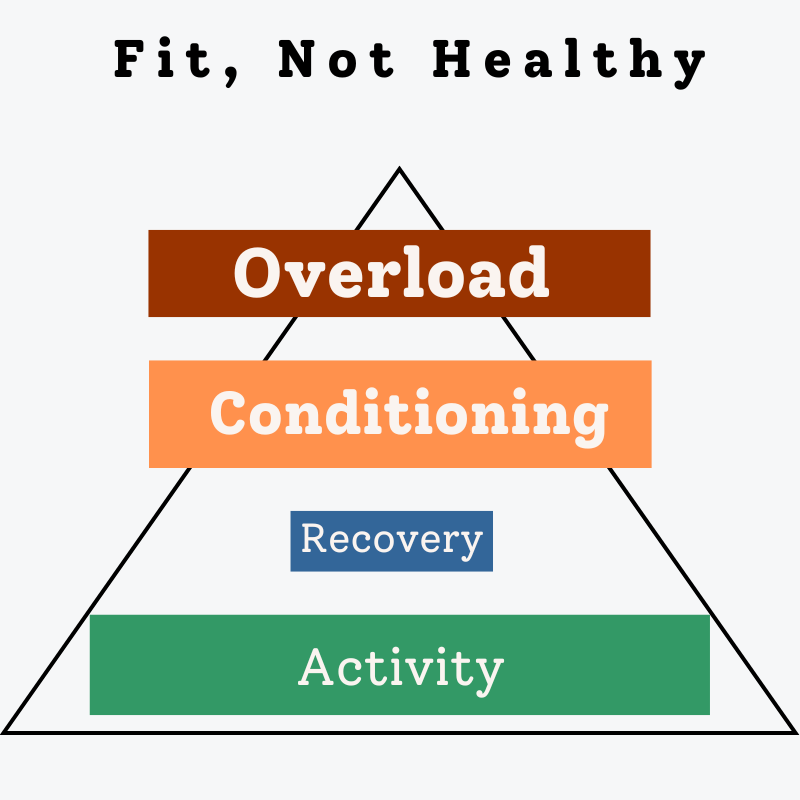
Often, your pyramid is upside down—too much overload, not enough recovery.
Rebuilding the Pyramid
Start from the bottom and progress upward. Each layer should be well established before adding the next.
Phase 1 – Activity
Increase general daily movement. Aim for 7,000–10,000 steps, take frequent breaks from sitting, and look for ways to naturally move more throughout the day.
If health issues or pain are barriers to activity: Start with low impact Zone 1 exercise. Use gentle cardio machines (like a recumbent bike or rower) to add non-stressful movement in short bouts. This prepares your body to tolerate more structured training.
Phase 2: Recovery with a Focus on Zone 2
If you can handle an active lifestyle and/or Zone 1 exercise, progress to Zone 2. Start with 10–20 minutes per session and work toward 60–150 minutes per week. These sessions should feel easy but purposeful.
Phase 3: Conditioning
When Zone 2 feels solid and recovery is strong, add 1–2 moderate-intensity sessions per week. This might be hill intervals, tempo work, or a sustained brisk effort. Keep this to 10–20% of your total training time.
Phase 4: Overload
Only after Activity, Recovery, and Conditioning are well-established should you introduce high-intensity training. This could be short HIIT sessions or sprint intervals, limited to 5–10% of your total training time.
Think of each layer as a prerequisite for the next. Skipping ahead often leads to burnout, injury, or poor results.
A well build cardio pyramid should look like this:
- Active lifestyle
- 80% of Exercise time spent on Recovery (some Zone 1, mostly Zone 2)
- 10–15% Conditioning
- 5–10% Overload
Maintain your pyramid and you’ll see:
- Better metabolism and energy
- Higher VO₂ max
- Fewer injuries and less pain
- Improved memory, mood, and focus
- Lower blood pressure and cardiovascular risk
- Better blood sugar and hormone balance
- Better skin, hair, and muscle tone
And yes—you’ll look better naked.
All for about 2.5 hours per week. That’s just 2.2% of your weekly waking hours.
Want to go high-performance? Train more—but keep the proportions the same.
Final Thoughts
Cardio doesn’t have to be complicated. But it does have to be intentional.
- Build activity as your base
- Add Recovery (Zone 2) as your foundation
- Sprinkle in Conditioning and Overload
- Don’t rush. Build it for life.
And remember: small, weekly investments in your fitness will compound into something that money can’t buy.